
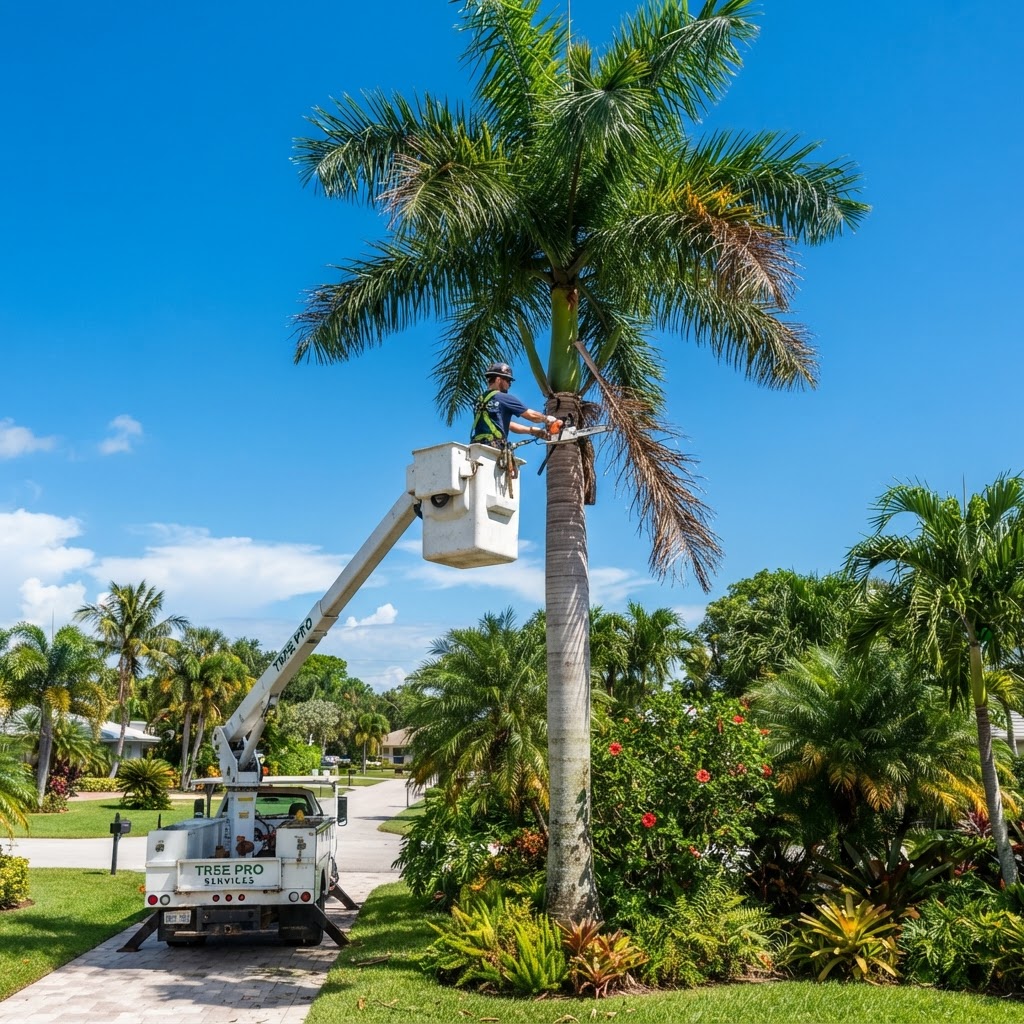
Palm trees are iconic symbols of Southwest Florida living. Whether you have stately royal palms, coconut palms swaying in the breeze, or queen palms lining your driveway, proper care keeps them healthy and beautiful while preventing safety hazards. Here's everything Fort Myers, Naples, and Cape Coral homeowners need to know about palm tree maintenance.
Understanding Palm Tree Biology
Unlike traditional trees, palms are actually giant grasses with unique growth patterns. They grow from a single bud (the growing point) at the crown. Damage to this bud kills the entire palm. Understanding this helps you avoid deadly pruning mistakes common in Southwest Florida.
Palms don't have branches—they have fronds. They don't heal like traditional trees but compartmentalize damage. They grow continuously from the top and never increase in diameter. This unique biology requires specialized care different from oak or pine trees.
When to Trim Palm Trees in Florida
Annual trimming is recommended for most Southwest Florida palms. The best time is late spring to early summer (May-June) after new fronds have emerged but before hurricane season intensifies. This timing ensures:
- Optimal growth and health
- Removal of seed pods before they become too heavy
- Hurricane preparation
- Prevention of frond breakage during summer storms
However, dead fronds should be removed anytime they appear, as they pose fire hazards, attract pests, and can fall causing injury or damage.
Proper Palm Tree Trimming Techniques
What to Remove
Safe, healthy trimming includes removing only:
- Dead fronds (brown and hanging): Completely dead leaves
- Dying fronds (more than 50% brown): Leaves past saving
- Seed pods and flowers: Heavy fruit clusters that strain the palm
- Broken fronds: Damaged leaves from storms or accidents
What NOT to Remove
Never remove green, healthy fronds. This practice, called "hurricane cutting" or "hat racking," is extremely harmful and widespread misconception in Florida. Here's why:
- Nutrient deficiency: Green fronds produce food through photosynthesis
- Weakens structure: Fewer fronds mean weaker, more vulnerable palms in storms
- Invites disease: Excessive pruning stresses palms, making them susceptible to infections
- Stunts growth: Over-pruning slows or stops new frond production
- Creates hazards: Weak, stressed palms are MORE likely to fail in hurricanes
The 9-3 O'Clock Rule
When viewed from the side, never remove fronds above the 9 and 3 o'clock positions. This means keeping a full circle of green fronds around the crown. This guideline protects the palm's health while removing only dead material below the horizontal plane.
Common Palm Tree Problems in Southwest Florida
Lethal Bronzing Disease (Formerly Texas Phoenix Palm Decline)
This fatal disease is spreading rapidly through Fort Myers, Naples, and Cape Coral. Symptoms include:
- Premature fruit/flower drop
- Browning of older fronds first (unusual—palms typically brown from bottom up)
- Rapid decline once symptoms appear
There is no cure. Infected palms must be removed quickly to prevent spread. Quarterly antibiotic injections may protect valuable palms in high-risk areas.
Ganoderma Butt Rot
A fungal disease causing trunk decay. Look for shelf-like fungal growth (conks) at the base. Infected palms become structurally unsound and must be removed for safety. This disease is common in older Southwest Florida landscapes.
Nutritional Deficiencies
Florida's sandy soils often lack nutrients palms need:
- Potassium deficiency: Oldest fronds yellow/brown with orange/brown spots
- Magnesium deficiency: Yellow bands on older fronds
- Manganese deficiency: New fronds emerge small and yellow ("frizzle top")
Regular fertilization with palm-specific formula (8-2-12-4 + micronutrients) prevents these issues.
Fusarium Wilt
Especially affects queen palms and Canary Island date palms. Causes one-sided wilt and browning. No cure exists—infected palms must be removed to prevent disease spread.
Fertilizing Palm Trees
Proper fertilization is crucial for palm health in Southwest Florida:
When to Fertilize
Apply palm fertilizer 3-4 times per year:
- March/April (spring)
- June/July (early summer)
- September/October (fall)
- Optional: December/January (winter) for young palms
Best Palm Fertilizer
Use slow-release palm fertilizer with the following ratio:
- 8-2-12-4 (Nitrogen-Phosphorus-Potassium-Magnesium)
- Plus micronutrients: manganese, iron, boron, copper, zinc
- 100% slow-release for even feeding
Apply in a circle around the trunk, extending to the drip line. Water thoroughly after application.
Hurricane Preparation for Palm Trees
Contrary to popular belief, over-pruning does NOT protect palms in hurricanes—it weakens them. Proper hurricane prep includes:
- Remove dead fronds only: Eliminates projectiles without weakening the palm
- Remove seed pods: Heavy coconuts and date clusters become dangerous missiles
- Keep full crown of green fronds: Provides flexibility and reduces breakage
- Ensure proper nutrition: Healthy palms withstand winds better
- Check for disease: Diseased palms are failure risks in storms
Why Professional Palm Care Matters
Palm tree maintenance looks simple but requires expertise:
- Safety: Working at height near power lines is extremely dangerous
- Proper techniques: Professionals know correct pruning methods
- Disease identification: Early detection saves palms and prevents spread
- Equipment: Specialized tools and safety gear required
- Liability: Licensed companies carry insurance for accidents
Professional Palm Tree Services
At Sunshine Tree, our certified arborists provide expert palm tree maintenance throughout Fort Myers, Naples, Cape Coral, and Southwest Florida. We understand Florida palm species and proper care techniques.
Our services include proper trimming, fertilization, disease diagnosis, hurricane preparation, and palm removal when necessary. We follow University of Florida IFAS guidelines for all palm care.
Popular Palm Trees in Southwest Florida
Royal Palm
Tall, stately palms with smooth gray trunks and bright green crownshafts. Require regular trimming of seed pods. Relatively disease-resistant.
Coconut Palm
Iconic beach palms. Require regular coconut removal for safety. Susceptible to lethal bronzing disease. Need micronutrient supplementation.
Queen Palm
Feathery fronds, orange fruit. Popular but high-maintenance. Prone to fusarium wilt and nutritional deficiencies. Require regular fertilization.
Sabal Palm (Cabbage Palm)
Florida's state tree. Hardy, drought-tolerant, and low-maintenance. Excellent choice for Naples and Fort Myers landscapes. Hurricane-resistant.
Final Thoughts
Palm trees are Southwest Florida's signature landscape element. With proper care—conservative pruning, regular fertilization, disease monitoring, and professional maintenance—your palms will thrive for decades, enhancing your property's beauty and value.
Remember: when in doubt, under-prune rather than over-prune. Your palms will thank you with vigorous growth and stunning appearance. Contact professional palm care specialists in Fort Myers, Naples, or Cape Coral for expert service that keeps your palms healthy and beautiful year-round.